
Most founder videos die in silence.
They sit on cloud storage, forwarded to investors who watch 15 seconds before closing the tab. No follow-up. No curiosity. No next meeting.
It’s not that your story isn’t compelling. It’s that 9 out of 10 fundraising videos are built wrong—and investors can feel it in the first five seconds.
After producing 50+ founder videos that have raised capital, moved markets, and changed conversations, we’ve seen exactly where founders get it wrong. The patterns are predictable. The fixes are mechanical. And the difference between a dead video and one that opens doors is rarely about production budget. It’s about structure, strategy, and nerve.
Here are the five reasons your fundraising video fails—and what to do instead.
Mistake #1: The Weak Opening (You Lost Them in 3 Seconds)
What it looks like: Your video opens with your company logo and a voiceover explaining what you do. By 0:05, an investor is looking at Slack.
Why? Because opening with what you do is boring. Nobody cares about your product in the first three seconds. Investors care about the problem you’re solving and why it matters to their portfolio.
How to fix it:
Open with the problem, not the solution. Make it visceral. Not “We’re building software for HR teams,” but “Right now, 40% of corporate time is wasted on admin work that adds zero value. Every day you wait to fix this costs your company $2M.”
Start with an outcome or tension that immediately matters to your audience. Coupa Series B video opened this way: instead of explaining their supply chain software, it showed a live purchasing meeting where decisions took minutes instead of weeks—and cut to the CMO saying, “That time back means everything to a startup moving fast.”
The first five seconds should make an investor lean forward, not zone out.
Mistake #2: No Proof (You’re Asking Them to Believe, Not See)
What it looks like: You tell the investor your product works, your customers love it, and your growth is accelerating. Then you cut to the next scene and hope they believed you.
What works: Show it. Not in a generic demo. In real evidence.
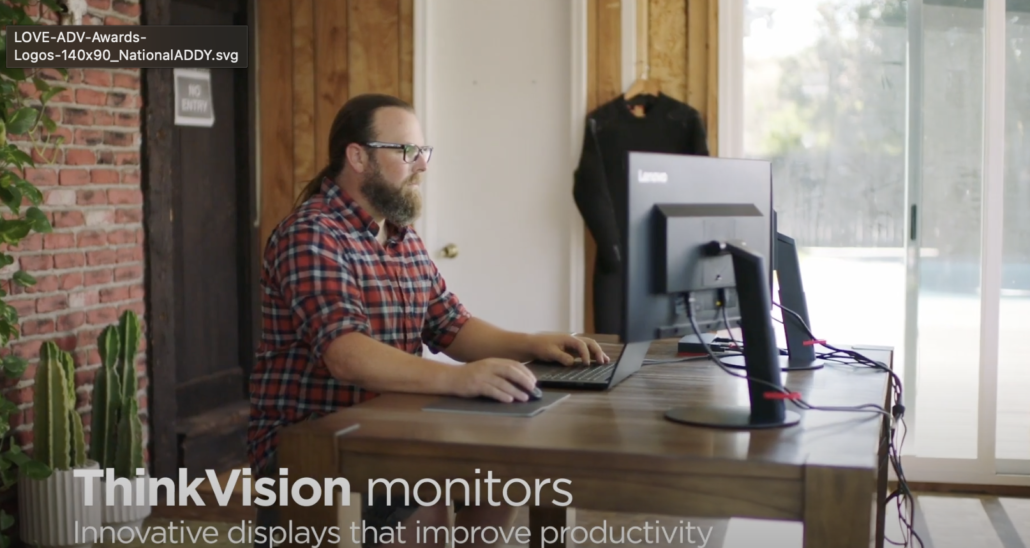
Lenovo’s viral video (26% market share lift, 5M+ views, Addy Award winner) worked because it didn’t say “Our computers are powerful.” It showed engineers and creators using the product in context—rendering 3D models, editing film, running simulations. You watched it work. You believed it worked because you saw it.
How to fix it:
- Customer data on screen: Quote real customers with names and companies, not anonymous testimonials. Show growth metrics (MRR growth, retention, NPS scores) if you have them.
- Live product in action: Not a polished demo—real workflows. If your software saves time, show someone actually saving that time.
- Credibility anchors: Investors raised, customers signed, revenue milestones. If you don’t have a ton of these yet, show your team’s pedigree (previous exits, domain expertise, industry awards).
Coupa’s follow-up investor updates used this formula: product in context + real employee quotes about impact + concrete metrics. Investor interest moved noticeably.
Mistake #3: The Wrong Tone (You Sound Like a Corporate Guy Reading a Script)
What it looks like: Your founder is wearing a blazer, standing in front of a fake background, delivering a perfectly polished monologue in a cadence that sounds like a tech conference talk.
Investors don’t want slick. They want authentic conviction.
What works: Energy that matches your story. If your company is about speed and chaos (which most Series A companies are), your video should feel like it moves. If you’re solving a serious problem for enterprise, you can be composed—but still grounded. Never robotic.
The best founder videos show founders thinking, not reciting. There’s space for real conversational moments. Pauses. Genuine enthusiasm when talking about what you’ve built.
How to fix it:
- Hire a director who gets founder psychology. A video producer who’s only made corporate content will shoot your founder like a training video. You need someone who directs for energy and authenticity.
- Script conversation, not speeches. Let your founder talk naturally. Capture multiple takes, showing different energy levels. The director’s job is finding the ones that feel real but purposeful.
- Match visual pacing to your story. Fast-moving growth story? Faster cuts, higher energy. Deep technical problem? Slower reveals, more thoughtful pacing.
Coupa’s video felt like a founder explaining her business to an investor over coffee—not performing on a stage. That’s the tone that sticks.
Mistake #4: Bad Audio & Sound Design (You Spent $80K on Cameras, $0 on Sound)
What it looks like: Crystal-clear camera work with mumbled dialogue, inconsistent audio levels, and no sound design to guide emotion.
Audio is the difference between a polished video and an amateur one. Bad audio says “we don’t know what we’re doing.” Good audio says “we care about quality.”
Most founders don’t notice bad audio until they see it compared to good audio side-by-side. Then they can’t unhear it.
How to fix it:
- Professional lav mic + audio engineer during shoot. Not during editing. Capturing clean dialogue during production is non-negotiable.
- Sound design that supports your narrative. The right music bed, ambient sound, and sound effects don’t distract—they guide you emotionally through the story. Lenovo’s video used subtle sound design to amplify the feeling of speed and capability.
- Audio mix that prioritizes clarity. Dialogue should always be intelligible, even in busy scenes. Everything else (music, SFX) sits underneath.
If you’re shooting with a $40K budget, spend $3K–$5K on professional audio capture and mixing. It’s the best ROI you’ll get.
Mistake #5: No Clear CTA (You End With “Questions?” Instead of “Let’s Move”)
What it looks like: Video ends with a soft fade to black and your company logo. Investor watches it, feels moved, closes the laptop, and forgets to follow up because there’s no reason to take the next step right now.
CTAs in fundraising videos aren’t aggressive sales pitches. They’re invitations.
How to fix it:
- End with a specific next step. Not “We’d love to chat,” but “Next week we’re demoing to three Series B leads—let’s set a time.” Or “Here’s how you can see our latest customer results.” Give them something to do, not just something to feel.
- Put a link/contact info on screen. Video still frames are easy to miss in email. Put your founder’s email or a calendly link in the YouTube description and in on-screen text at the end.
- Make the CTA match your positioning. If you’re premium, the CTA should feel like an opportunity, not a demand. “Explore how [product] is changing [industry]” vs. “Buy now.”
Coupa’s videos all ended the same way: a specific invitation to see live results or schedule a conversation. Frictionless. Clear. Actionable.
The Pattern: Coupa Series B & Lenovo’s Proof
Coupa went into their Series B with a weak narrative—good software, growing customer base, but no clear story about why they’d win the market. Their fundraising video fixed that by showing their product solving a real problem in real time, with real speed. It moved from “here’s our software” to “here’s why this matters.”
Post-launch? Investor interest increased. Not coincidentally.
Lenovo’s commercial did the same thing for a different audience (consumers, not investors). It showed capability in context. 26% market share lift followed. 5M+ views. Addy Award. The video didn’t sell—it proved.
What to Do Now
If your fundraising video is stuck in drafts, or you’ve already shot something that feels flat:
Option 1: Reshoot with a focus on these five areas. Find a director who specializes in founder content (not generic corporate video). Budget 3–4 weeks.
Option 2: Tear down what’s not working and rebuild. Sometimes it’s just the opening. Sometimes it’s audio and pacing. Sometimes it’s the ending CTA.
Either way, start with your investors’ perspective: What do you need to show (not say) to make them believe you’ll win? Build from there.
The best fundraising videos don’t feel like selling. They feel like proof. That’s the shift.
Ready to turn your founder story into capital? See how Coupa moved their Series B round → and book a conversation about your video.
