Most founder videos die in silence.

They sit on cloud storage, forwarded to investors who watch 15 seconds before closing the tab. No follow-up. No curiosity. No next meeting.

It’s not that your story isn’t compelling. It’s that 9 out of 10 fundraising videos are built wrong—and investors can feel it in the first five seconds.

After producing 50+ founder videos that have raised capital, moved markets, and changed conversations, we’ve seen exactly where founders get it wrong. The patterns are predictable. The fixes are mechanical. And the difference between a dead video and one that opens doors is rarely about production budget. It’s about structure, strategy, and nerve.

Here are the five reasons your fundraising video fails—and what to do instead.
Kickstarter Video production


Mistake #1: The Weak Opening (You Lost Them in 3 Seconds)

What it looks like: Your video opens with your company logo and a voiceover explaining what you do. By 0:05, an investor is looking at Slack.

Why? Because opening with what you do is boring. Nobody cares about your product in the first three seconds. Investors care about the problem you’re solving and why it matters to their portfolio.

How to fix it:

Open with the problem, not the solution. Make it visceral. Not “We’re building software for HR teams,” but “Right now, 40% of corporate time is wasted on admin work that adds zero value. Every day you wait to fix this costs your company $2M.”

Start with an outcome or tension that immediately matters to your audience. Coupa Series B video opened this way: instead of explaining their supply chain software, it showed a live purchasing meeting where decisions took minutes instead of weeks—and cut to the CMO saying, “That time back means everything to a startup moving fast.”

The first five seconds should make an investor lean forward, not zone out.


Mistake #2: No Proof (You’re Asking Them to Believe, Not See)

What it looks like: You tell the investor your product works, your customers love it, and your growth is accelerating. Then you cut to the next scene and hope they believed you.

What works: Show it. Not in a generic demo. In real evidence.

Lenovo’s viral video (26% market share lift, 5M+ views, Addy Award winner) worked because it didn’t say “Our computers are powerful.” It showed engineers and creators using the product in context—rendering 3D models, editing film, running simulations. You watched it work. You believed it worked because you saw it.

How to fix it:

  • Customer data on screen: Quote real customers with names and companies, not anonymous testimonials. Show growth metrics (MRR growth, retention, NPS scores) if you have them.
  • Live product in action: Not a polished demo—real workflows. If your software saves time, show someone actually saving that time.
  • Credibility anchors: Investors raised, customers signed, revenue milestones. If you don’t have a ton of these yet, show your team’s pedigree (previous exits, domain expertise, industry awards).

Coupa’s follow-up investor updates used this formula: product in context + real employee quotes about impact + concrete metrics. Investor interest moved noticeably.


Mistake #3: The Wrong Tone (You Sound Like a Corporate Guy Reading a Script)

What it looks like: Your founder is wearing a blazer, standing in front of a fake background, delivering a perfectly polished monologue in a cadence that sounds like a tech conference talk.

Investors don’t want slick. They want authentic conviction.

What works: Energy that matches your story. If your company is about speed and chaos (which most Series A companies are), your video should feel like it moves. If you’re solving a serious problem for enterprise, you can be composed—but still grounded. Never robotic.

The best founder videos show founders thinking, not reciting. There’s space for real conversational moments. Pauses. Genuine enthusiasm when talking about what you’ve built.

How to fix it:

  • Hire a director who gets founder psychology. A video producer who’s only made corporate content will shoot your founder like a training video. You need someone who directs for energy and authenticity.
  • Script conversation, not speeches. Let your founder talk naturally. Capture multiple takes, showing different energy levels. The director’s job is finding the ones that feel real but purposeful.
  • Match visual pacing to your story. Fast-moving growth story? Faster cuts, higher energy. Deep technical problem? Slower reveals, more thoughtful pacing.

Coupa’s video felt like a founder explaining her business to an investor over coffee—not performing on a stage. That’s the tone that sticks.


Mistake #4: Bad Audio & Sound Design (You Spent $80K on Cameras, $0 on Sound)

What it looks like: Crystal-clear camera work with mumbled dialogue, inconsistent audio levels, and no sound design to guide emotion.

Audio is the difference between a polished video and an amateur one. Bad audio says “we don’t know what we’re doing.” Good audio says “we care about quality.”

Most founders don’t notice bad audio until they see it compared to good audio side-by-side. Then they can’t unhear it.

How to fix it:

  • Professional lav mic + audio engineer during shoot. Not during editing. Capturing clean dialogue during production is non-negotiable.
  • Sound design that supports your narrative. The right music bed, ambient sound, and sound effects don’t distract—they guide you emotionally through the story. Lenovo’s video used subtle sound design to amplify the feeling of speed and capability.
  • Audio mix that prioritizes clarity. Dialogue should always be intelligible, even in busy scenes. Everything else (music, SFX) sits underneath.

If you’re shooting with a $40K budget, spend $3K–$5K on professional audio capture and mixing. It’s the best ROI you’ll get.


Mistake #5: No Clear CTA (You End With “Questions?” Instead of “Let’s Move”)

What it looks like: Video ends with a soft fade to black and your company logo. Investor watches it, feels moved, closes the laptop, and forgets to follow up because there’s no reason to take the next step right now.

CTAs in fundraising videos aren’t aggressive sales pitches. They’re invitations.

How to fix it:

  • End with a specific next step. Not “We’d love to chat,” but “Next week we’re demoing to three Series B leads—let’s set a time.” Or “Here’s how you can see our latest customer results.” Give them something to do, not just something to feel.
  • Put a link/contact info on screen. Video still frames are easy to miss in email. Put your founder’s email or a calendly link in the YouTube description and in on-screen text at the end.
  • Make the CTA match your positioning. If you’re premium, the CTA should feel like an opportunity, not a demand. “Explore how [product] is changing [industry]” vs. “Buy now.”

Coupa’s videos all ended the same way: a specific invitation to see live results or schedule a conversation. Frictionless. Clear. Actionable.


The Pattern: Coupa Series B & Lenovo’s Proof

Coupa went into their Series B with a weak narrative—good software, growing customer base, but no clear story about why they’d win the market. Their fundraising video fixed that by showing their product solving a real problem in real time, with real speed. It moved from “here’s our software” to “here’s why this matters.”

Post-launch? Investor interest increased. Not coincidentally.

Lenovo’s commercial did the same thing for a different audience (consumers, not investors). It showed capability in context. 26% market share lift followed. 5M+ views. Addy Award. The video didn’t sell—it proved.
COUPA


What to Do Now

If your fundraising video is stuck in drafts, or you’ve already shot something that feels flat:

Option 1: Reshoot with a focus on these five areas. Find a director who specializes in founder content (not generic corporate video). Budget 3–4 weeks.

Option 2: Tear down what’s not working and rebuild. Sometimes it’s just the opening. Sometimes it’s audio and pacing. Sometimes it’s the ending CTA.

Either way, start with your investors’ perspective: What do you need to show (not say) to make them believe you’ll win? Build from there.

The best fundraising videos don’t feel like selling. They feel like proof. That’s the shift.


Ready to turn your founder story into capital? See how Coupa moved their Series B round → and book a conversation about your video.
Here is the story of 12 commercial films, 90 crazy days, a pandemic – and an Addy award with our client Lenovo.

We were set to shoot last March when the pandemic changed everything. We faced major unknowns. Can we shoot during a lockdown? How? And most importantly – how to protect the crew?

After a few remote shoot experiments that failed, LA authorities issued new guidance: crews limited to 10; mandatory tests, masks and 6ft distance; leading to the elimination of on-set makeup; etc.

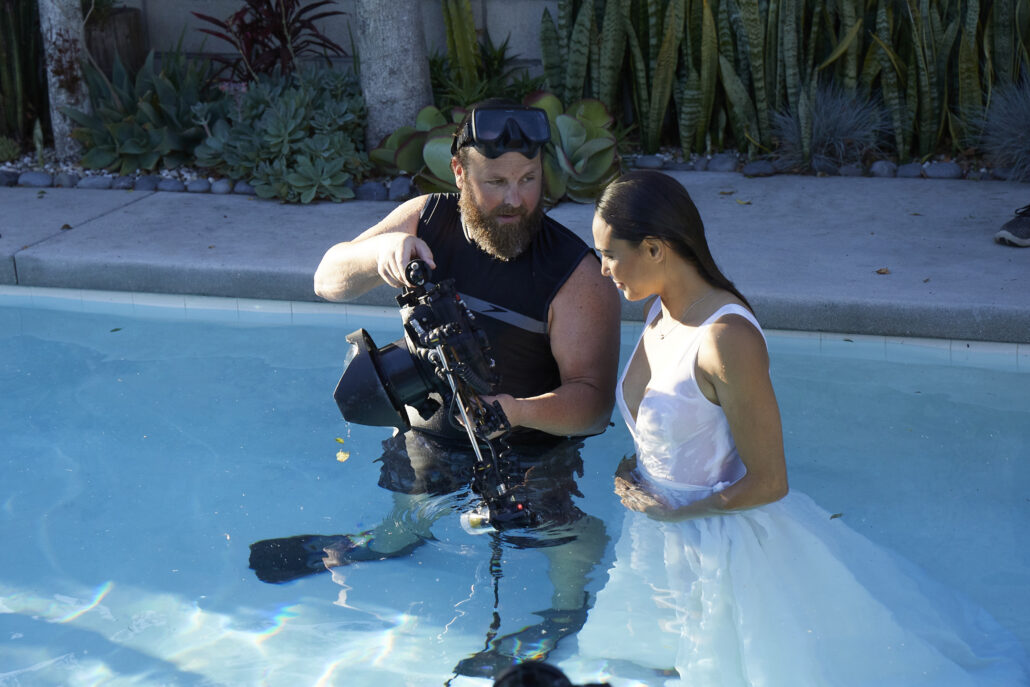
Our scripted 40-people crew approach went out the window. Instead of actors, we found real small business owners who shared their real stories — unscripted, raw, recorded in their work environments. (For one it was a swimming pool — fun!)

video production process for Lenovo

video production process for Lenovo

Ten phenomenal entrepreneurs talked about how they used tech in their business every day. The stories were gripping, we were excited. And everything that could go wrong — did so:

– Day one, neighbor complaints stopped the shoot

– Day two, one of the business owners reported they’d contracted Covid. It turned out to be a false-positive, but in the meantime, we had to shut everything down, get everyone retested, have dozens of heated conversations  – “I’m sorry but I have to inform you that the crew that visited the locations, was exposed and I strongly advise you take a Covid test…”

When we finally got ALL negative results and were ready to resume filming… LA got slammed with protests. Our art director was attacked at a bar protecting his friend’s property from looters. Carrying around $500K equipment in a van was not an attractive option. We decided to wait again.

It was worth it. Our Lenovo video series tells amazing, human stories. Lenovo was happy, the videos saw 5M+ views and we won an SF Addy award.

Most importantly — everyone had a blast.

HUGE THANKS to our crew who made it through.

We will be posting one video every day — check them out and tell us what you think!!

Video #1 features Brett Stanley – an underwater photographer and podcast host, who loves creating dream-like sequences in the depths of his swimming pool.

Client: Lenovo

Agency: Position2

Production company: Feel Good Video

Executive Producer: Katia Kostiukova

Director: Anthony Pietromonaco

DP: Chris Hamilton

Line Producer: Alastair Ramsden

Gaffer: Jonathan Shryder

Grip: Zach Davis

1st AC: Tiffany Murray

Tech support: Brian Cardona

DIT Ben Crump

Art/Set Dresser: Jose Rojas

PA: Hunter Moranville

Postproduction: Michael Papavero

.#DoWhatYouCan’t

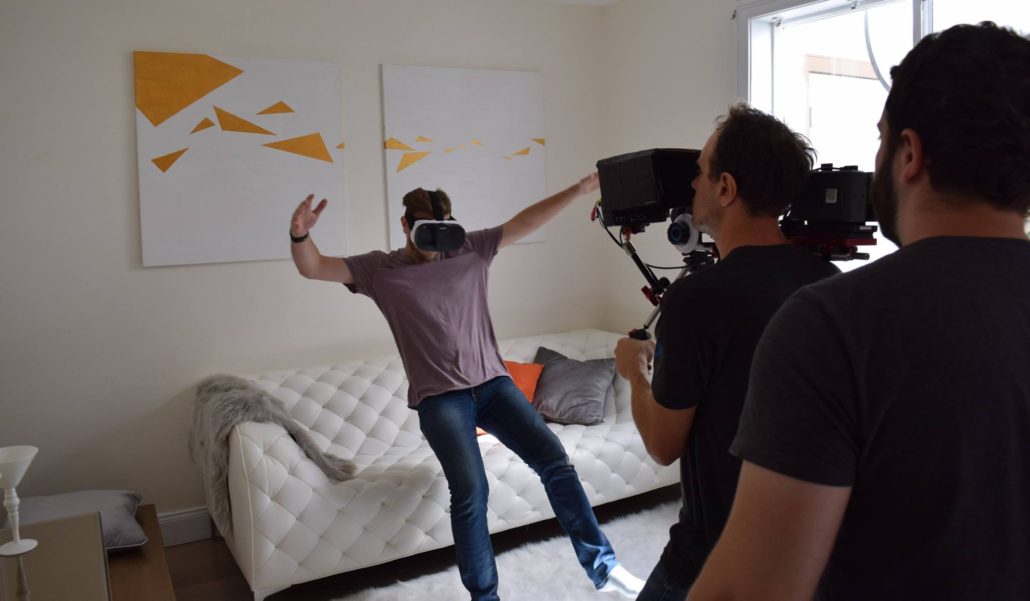
Samsung asked Feel Good Video, leading SF video production company, to film a video for global star Ivan Dorn… using Samsung Galaxy smartphone.

Feel Good Video - SF video production

Ivan Dorn

Challenge: 

  • Launch Samsung Galaxy phone as a camera tool of the digital creative class.

Feel Good Video team headed to New York for a two-day shoot blitz, complete with professional dancers, a soccer team and pyro galore. The idea was to use Samsung phone as a camera, prop and character:

  • Character: phone followed Ivan as he walked the streets of five boroughs.
  • Prop: Ivan used the camera as a prop for a dynamic choreographed dance part of the video.  
  • Mixed Media Camera: video utilizes vertical and horizontal formats. And photos. Basically anything that comes from a phone.

Published on Samsung Mobile’s YouTube channel, the phone-made music video energetically underscores Samsung’s capabilities for creative thinkers and innovators. 

As a leading San Francisco Bay Area ad agency, we managed all aspects of production, including motion graphics, editing, music, voiceover, sound design and color correction.

  • Reached over 1M views on YouTube with Samsung music video shot entirely on Galaxy 8 phone.

Coupa Software is a leading cloud platform for business spend; Unicorn that successfully IPO-d in 2016.  They wanted to stand out from the enterprise software pack with a national TV ad that would appeal to CFOs—and make them smile.

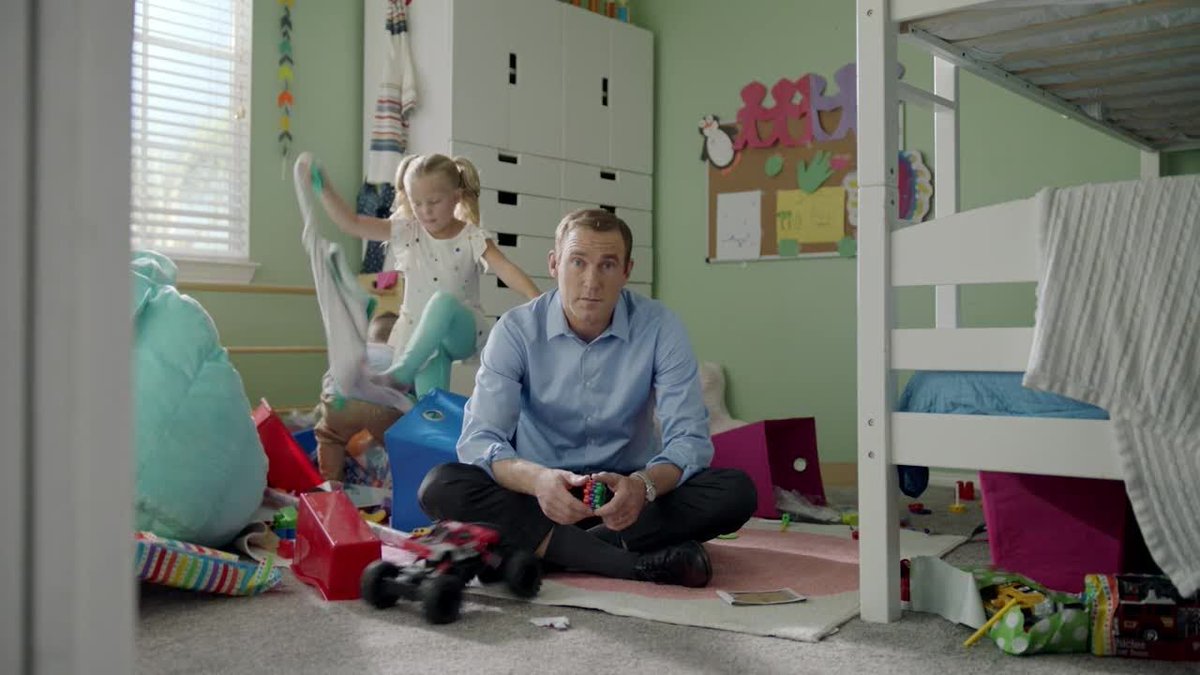
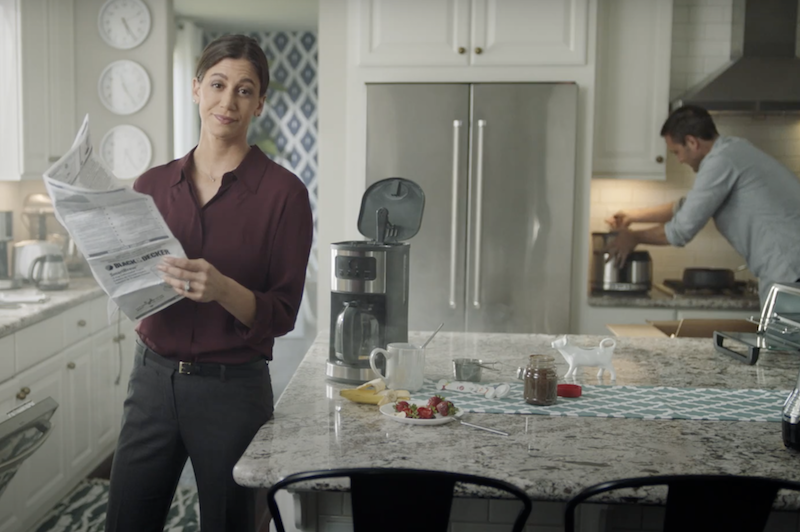
For Feel Good Video, leading San Francisco video production company, making business videos entertaining and engaging is very exciting. We teamed with Coupa and Liquid Agency to craft a story involving 3 CFOs facing total chaos at home — battling kids, coffee makers, constant overspending — and contrasted it with the relaxing peace and order they have at “work sweet work.” The ad aired nationwide on CNBC—and you can watch the director’s cut here.

As a leading San Francisco Bay Area ad agency, we managed all aspects of production, including motion graphics, editing, music, voiceover, sound design and color correction.

Take a look and let us know what you think over at our Facebook page!

All five were the stars of a recent Feel Good Video production!

Client Ernest Packaging is facing a massive organizational challenge. With soaring demand for packaging with the global surge in ecommerce, the company is experiencing unprecedented growth. They’re hiring hundreds of new employees a year—and need to find a way to attract top-tier talent in a frothy hiring market.

To solve this problem, Feel Good Video teamed up with Liquid Agency to create a series of videos to drive recruitment interest from savvy candidates—and stand out from the typical company. Working with Vince Vincent, Ernest’s VP of Talent, we filmed a series of mock interviews in which Vince was forced to turn down each applicant because they didn’t exactly fit the company culture.

For starters, the sheep didn’t stand up for himself.

The bulldozer was too pushy, natch.

The clown couldn’t get serious.

The porcupine was too prickly.

And the robot gave new meaning to the expression “all circuits are busy.”

This shoot was a thrilling day in which we learned sheep and porcupines must be stationed at opposite sides of a parking lot, and bulldozers can help with garage door repair in a pinch. The videos have earned thousands of views so far in limited release and we’ll update you when we hear more from Ernest on the hiring impact.

As a leading San Francisco Bay Area ad agency, we managed all aspects of production, including 3D graphics, motion graphics, editing, music, voiceover, sound design and color correction.

Contact FGV today for a creative video for your product or company!

Time to launch your new product? Kick off a crowdfunding campaign? Up-level your corporate video? That means you’ll need a video–and a video production team.

Which should be really fun! But can also be a little terrifying. There’s so much to think about, from vendor selection and budget to scheduling and storyline. And that doesn’t even begin to get into all the little parts of creating a video that you probably haven’t even started to think about—wrangling equipment, managing casting, scouting locations, keeping everybody fed, editing—that can make a seemingly simple video request a massive production.

That means you’ll probably have a lot of questions. Don’t worry, we have a lot of answers (though not ALL the answers!). From decades of combined experience working on video projects of all stripes, here the top five video questions we get from organizations ready to get started–also known as the Feel Good Video FAQ.

What’s your price range?
Budgets vary–a lot.

Yes, it’s an admittedly annoying answer that means you have to send us an email, but it’s the only fair response simply because there are too many variables we just don’t know—and which can make a big impact on pricing.

There are a few rules of thumb. The bigger the cast, the more it costs. The more locations, the more it costs. Complexity costs more, but you also get more of a discount with bigger projects as economies of scale kick in.

We don’t even give ballparks because they might be totally unrealistic for what you have in mind. That said, I can say that we strive to deliver awesome value to all of our clients—and they tell us we do too.

How much of the process do you handle?
We do as much or as little as you need—from storyboarding and scripting to casting and location scouting, style mood boards to editing and color correction. Most clients let us take as much as we can off their plate for true turnkey service. And we always include our clients in all major decisions, particularly scripting, casting and final cuts.

Where are you based?
We’re proud to work with companies around the world! We’re physically based in the heart of Silicon Valley in Palo Alto and we do most of our filming in Los Angeles. We also film in New York, Chicago and about 25 countries abroad. LA talent is typically less expensive—and really good. And California is famous of having stunning weather and the best locations opportunities for filming any time of the year. That said, we have an extensive network to get the job done just about anywhere. (Still looking for a client to challenge us on Antarctica!)

Do you have equipment?
We take care of all equipment for you to meet professional specifications and deliver cinematic quality. If you have specific questions about cameras and gear, drop us a line and we’ll sort that out.

I need a video yesterday. What’s your timeline?
We’re really fast. Like, once did a video soup-to-nuts in 12 hours fast. Sometimes we may get jammed up with shoots, but it’s rarely us holding up production. Try us!

Any more questions we missed? Just let me know. Thanks—and let’s go make a video!